Mae Sai - Things to Do in Mae Sai in September

Things to Do in Mae Sai in September

September weather, activities, events & insider tips

Fair time to visit Low Season · Budget Friendly

September Weather in Mae Sai

Temperature, rainfall and humidity at a glance

89°F (32°C) High Temp
73°F (23°C) Low Temp
15.9 inches (404 mm) Rainfall
70% Humidity
⚠ Flash flooding threatens the Sai River and low-lying streets near the border crossing. September is Mae Sai's wettest month historically. Sustained multi-day rain floods market streets and ground-floor rooms with little warning. Request upper floors when booking. Non-negotiable. ⚠ Landslides menace unpaved mountain roads, secondary routes toward hill-tribe villages west of Mae Sai. Saturated hillsides slump across roads without warning after heavy rain. Stick to paved routes. Skip unpaved mountain tracks after prolonged rain. Simple. ⚠ Peak mosquito season hits due to standing water across the lowlands. Dengue fever circulates in Chiang Rai Province. September's wet conditions breed mosquitoes aggressively. Use repellent consistently, dawn and dusk. Sleep under treated nets if your room lacks screens. Protect yourself.

Is September Right for You?

Weigh the advantages and considerations before booking

Advantages
  • + September is deep low season in Mae Sai. Rates drop sharply. The border crossing area, normally clogged with day-trippers and traders, thins out enough that you can linger at the stalls along Phahonyothin Road without being elbowed aside. The few guesthouses and hotels in town tend to have open rooms even on short notice. Owners are more inclined to negotiate.
  • + The monsoon transforms the hills west of Mae Sai into some of the most intensely green landscape in northern Thailand. The teak forests along the road toward Doi Tung drip with moisture. Waterfalls that barely trickle in March run at full force. The mist that settles into the valleys in the early morning gives the whole region a quality of light that dry-season visitors never see. If you came for photographs, September delivers.
  • + The Sai River, which marks the border with Myanmar, runs high and fast in September. The surrounding countryside feels alive in a way the dusty cool season cannot match. Rice paddies outside town are flooded and electric green. Farmers are out planting. The air smells like wet earth and wood smoke from kitchen fires. You are seeing Mae Sai the way locals live in it, not the sanitized version curated for high-season visitors.
  • + September heat is more manageable than the furnace of March and April, when Mae Sai regularly pushes past 35°C (95°F). Daytime highs hover around 32°C (89°F). The rain cools things down noticeably in the afternoons. Mornings before the clouds build are pleasant for walking the border market or exploring Tham Luang.
Considerations
  • The rainfall is no joke. September dumps roughly 404 mm (15.9 inches) across the month. When the storms come they hit hard. Flooding is a real possibility in low-lying parts of town, around the market streets near the river and the road south toward Mae Chan. In heavy years the Sai River overtops its banks. Sections of the border market shut down entirely until water recedes.
  • Several of the outdoor attractions in the surrounding hills become difficult or impossible to reach. Unpaved roads to some hill-tribe villages turn to slick red mud. A few of the trails around Doi Tung get washed out. If your primary reason for coming is trekking to remote Akha or Lahu settlements, September limits your options to the paved-road accessible ones.
  • Mae Sai's nightlife, never exactly legendary, contracts further in September. Some of the restaurants and beer bars along the main road shorten their hours or close for stretches during the low season. You are not going to find a party scene here in any month. September is the quietest the town gets after dark.

Best Activities in September

Top things to do during your visit

Tham Luang Cave Complex Exploration

Tham Luang, the cave system that became internationally known after the 2018 rescue, sits about 10 km (6.2 miles) south of Mae Sai proper and is one of the most compelling reasons to visit this corner of Chiang Rai Province. In September, the caves tend to have restricted access in certain deeper sections due to water levels. The main entrance chambers and the memorial exhibition area remain open. The cooler air inside the cave, around 23°C (73°F) year-round, feels like stepping into a different climate after the humidity outside. The limestone walls are slick with condensation. The sound of dripping water echoes off formations that took millennia to build. Go in the morning before any tour groups arrive. You might have the first chamber almost to yourself. The memorial area outside provides genuine emotional weight that most tourist stops in northern Thailand lack.

Booking Tip: No advance booking needed for the main exhibition area and accessible cave sections. Arrive before 10 AM for the quietest experience. Check locally whether deeper sections are accessible, as water levels in September can close interior passages with little notice. Licensed guides available on-site can add context the signage misses.
Doi Tung Royal Villa and Gardens Day Trip

The drive from Mae Sai up to Doi Tung, about 25 km (15.5 miles) to the southwest, is one of northern Thailand's most underrated mountain roads. In September the monsoon turns it spectacular. Clouds sit below you on the switchbacks. The Mae Fah Luang Garden blooms with temperate-zone flowers that have no business growing this close to the tropics. The cool air at 1,389 m (4,557 ft) elevation feels like someone turned the temperature dial back to a European spring. The Royal Villa itself, built for the late Princess Mother, is modest by royal standards. The views from the terrace across mist-filled valleys toward Myanmar justify the climb. The Doi Tung coffee plantations along the route produce some of Thailand's best arabica. The small cafe near the garden entrance serves it fresh. The smell of roasting beans mixes with pine and wet fern in a combination unique to this altitude.

Booking Tip: Self-drive or hire a driver from Mae Sai for the day. The road is paved all the way but wet and winding in September. Experienced drivers are worth it if you are not confident on mountain switchbacks. Book through local operators or check current guided tour options in the booking section below. Allow a full day to avoid rushing.
Golden Triangle Boat Tours on the Mekong

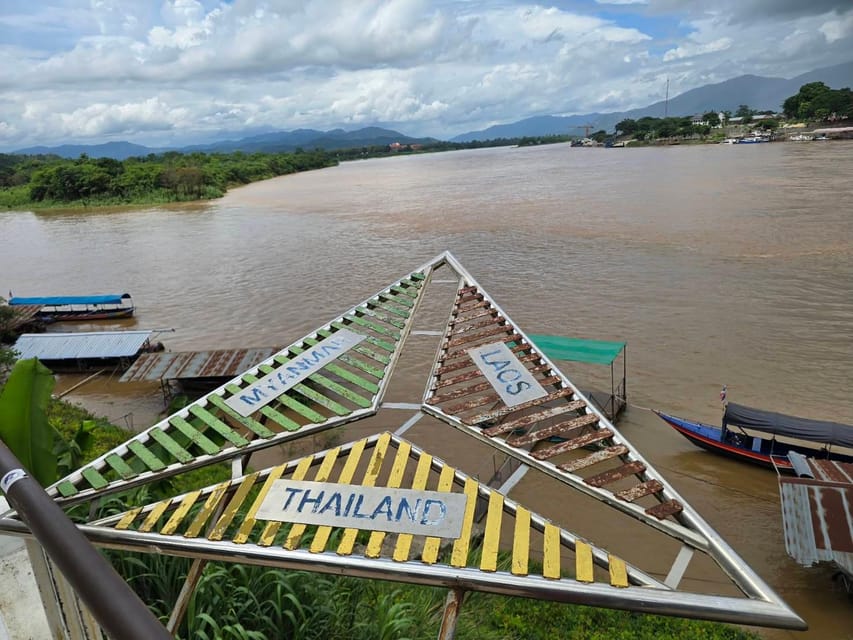
Sop Ruak's Golden Triangle viewpoint sits 30 km (18.6 miles) southeast of Mae Sai. This is where Thailand, Laos, and Myanmar converge at the Ruak and Mekong rivers. In September the Mekong runs brown and muscular, swollen with monsoon runoff from the Tibetan Plateau. The river is wider and faster than the calm blue ribbon tourists photograph in February. Longtail boats still run. The higher water improves the ride: you sit closer to the treeline on the Laotian bank, and boatmen can navigate nearer the shore where river buffalo cool in the shallows. The Hall of Opium museum near the viewpoint provides a sobering, thorough history of the region's opium trade. Most visitors find it more compelling than expected. The air smells of river mud and frangipani. In late afternoon the light on the water turns bronze.

Booking Tip: Longtail boat tours depart from the Sop Ruak landing throughout the day. September afternoons bring unpredictable squalls. Morning departures before 11 AM offer calmer water and better light. Book through licensed river operators or see current options in the booking section below. Life jackets are non-negotiable. September currents demand respect.
Mae Sai Border Market and Myanmar Crossing

The border crossing at the north end of Phahonyothin Road is Mae Sai's reason for existing. The market running along both sides of the street leading to the bridge concentrates the town's real energy. In September, with tourist numbers at their annual low, you can browse without the shoulder-to-shoulder press of high season. Stalls sell Myanmar lacquerware, jade of wildly varying quality, dried goods, and textiles woven by Shan communities across the border. The smell of thanaka paste hangs in the air. Every Myanmar woman wears this yellowish bark cosmetic. Grilled pork skewers and fermented tea leaf salad from food vendors tucked between clothing stalls add their own sharp tang. If the crossing to Tachileik is open, a day permit lets you walk across the Friendship Bridge. The Myanmar market feels materially different: rougher, louder, with a wider spread of Chinese-manufactured goods and a density of gold shops that catches first-timers off guard.

Booking Tip: No booking needed for the Thai-side market. Check current border status before traveling to Tachileik, as regulations shift. Bring your passport and two passport photos for the day permit. The walk across the bridge takes five minutes. Mornings before 10 AM offer the most comfortable temperatures. The freshest produce appears then at the food stalls.
Hill Tribe Cultural Visits via Paved Routes

The Akha, Lahu, and Yao communities in the hills surrounding Mae Sai are among the most accessible hill-tribe settlements in Thailand. Several sit along paved roads that remain passable even during September's heaviest rains. The villages along the Doi Mae Salong route, about 40 km (25 miles) west, offer a window into daily life. The more commercialized hill-tribe experiences near Chiang Mai have largely lost this quality. September is harvest preparation season. Women in traditional embroidered clothing work in fields and dry crops on bamboo racks. The tea plantations around Mae Salong, originally planted by Chinese Kuomintang refugees in the 1960s, are lush and fragrant in the wet season. The oolong tea served at small hilltop shops ranks among the best in Southeast Asia. The temperature at elevation sits around 25°C (77°F). Mist rolls through. The dry season cannot replicate this atmosphere.

Booking Tip: Hire a local guide through guesthouses in Mae Sai for cultural context. This ensures your visit is welcomed. Self-driving is possible on the paved Mae Salong road. Go slowly on wet curves. Community-based tourism operators offer the most responsible access. See current guided options in the booking section below. Allow a half to full day. Plan according to your interests.
Waterfall Chasing in Monsoon Flow

Several waterfalls within an hour's drive of Mae Sai barely register as a trickle in dry months. In September they become impressive cascades. The falls near Tham Luang and along the Doi Tung access roads run at peak volume, water crashing over mossy limestone ledges into pools cold enough to make you gasp. The surrounding forest is dense, dripping, and loud with insects and birdsong. Trails leading to the falls are slick with red clay and fallen leaves. This is not a manicured national-park experience. You will get muddy. The rocks are slippery. Proper footwear is essential. The payoff is waterfalls at their most powerful, surrounded by forest so green it looks artificial, with nobody else there. The humidity under the canopy sits near saturation. Mist from the falls barely registers against air that already feels like warm steam.

Booking Tip: No advance booking needed. Wear shoes with aggressive tread, not sandals. Bring a dry bag for electronics. Start early. Trails get muddier through the day, and afternoon storms can make creek crossings hazardous. Local guides from Mae Sai can point you to falls that are safe at current water levels. See the booking section below for current guided nature options in the area.

Where to Stay in Mae Sai in September

Hand-picked hotels across price tiers for September travellers.

September Events & Festivals

What's happening during your visit

Mid to late September, depending on lunar calendar
Wan Sart Duan Sip (Ancestor Offering Day)

This Thai merit-making tradition, tied to the tenth lunar month, typically falls in September and is observed at temples throughout Mae Sai. Locals prepare elaborate food offerings and bring them to the temple grounds before dawn. Wat Phra That Doi Wao, perched on the hill overlooking the border, is one of the more atmospheric places to witness the ceremony. The smell of incense and marigolds fills the temple grounds, monks chant in Pali as the sun rises over Myanmar, and the whole affair wraps up by mid-morning. It is a quiet, sincere ceremony rather than a spectacle, and respectful observers are welcome. Dress conservatively, covering shoulders and knees, and leave cameras on silent.

Packing Checklist

Bookmark this page — your progress is saved between visits

Need the full list with shopping links?

Climate-specific gear, brand recommendations, and what to leave at home.

View Mae Sai Packing List →

Essential Tips

Insider knowledge and common pitfalls to avoid

Insider Knowledge
The morning market behind Phahonyothin Road, running parallel one block to the east, is where Mae Sai residents shop for food. It starts around 5:30 AM and winds down by 8 AM. The noodle stalls there serve khao soi with a darker, more intensely spiced broth than the Chiang Mai version, made with a paste that includes dried chili and fermented shrimp, and the khanom jeen vendors offer the Shan-influenced version topped with pork blood curd and pickled mustard greens that you will not find further south. Go hungry. September flooding in Mae Sai follows a pattern locals read like weather. When the rain is steady for three or more days and the Sai River level rises past the bottom of the Friendship Bridge arches, the market streets nearest the border get ankle-deep within hours. If you see shopkeepers stacking goods on elevated shelves in the morning, that is your cue to stay on the higher ground toward Wat Phra That Doi Wao for the day. The night market near the border gate runs smaller in September but does not close entirely. The vendors who stay open tend to be the lifers, not the seasonal operators, and the food quality is arguably better because they are cooking for locals, not tourists. Look for the stalls grilling Shan sausages, a coarser, herbier version of sai ua with more turmeric and less lemongrass than the Chiang Mai style. If you are heading to Doi Tung or Mae Salong, fill your fuel tank in Mae Sai. Petrol stations get sparse quickly once you leave town heading west, and the mountain roads burn more fuel than you expect. The PTT station on the south end of Phahonyothin Road is the last reliable one before the climb.
Avoid These Mistakes
Assuming the border crossing into Tachileik is always open. Regulations change with political conditions on the Myanmar side, and September is not a month when border authorities prioritize tourist convenience. Check the current status with your guesthouse the morning you plan to cross, not the night before, because the situation can shift overnight. Packing only for heat and forgetting the elevation change. Mae Sai town sits at roughly 400 m (1,312 ft), but a day trip to Doi Tung takes you above 1,300 m (4,265 ft) where wet clothing and mountain air combine to make you uncomfortably cold. The temperature difference between Mae Sai's market and Doi Tung's summit can be 10°C (18°F) on a rainy September day. Renting a motorbike without wet-weather riding experience. The roads in and around Mae Sai are manageable when dry but become treacherous when September rain mixes with the oil film on asphalt. The stretch of Highway 1 south toward Mae Chan sees fast-moving truck traffic that throws spray across both lanes. If you have not ridden extensively on wet Asian roads, hire a driver instead.

Book Experiences in Mae Sai

Top-rated things to do in Mae Sai this September
Explore More Activities in Mae Sai

Didn't see anything interesting yet?

Browse Viator's full catalog of tours, day trips, food experiences, and private guides in Mae Sai.

See All Mae Sai Tours on Viator